
Title : Intelligent Modeling for Smarter Water Treatment: Optimizing Amoxicillin Photodegradation with GO/TiO₂ Nanocomposites
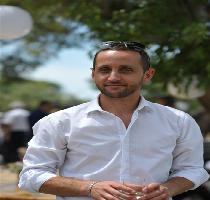
Name : Seyed Ghasem Rezvannasab
University : Shiraz University
Country : Iran
Download AbstractAbstract:
The widespread presence of antibiotics like Amoxicillin (AMX) in wastewater poses a significant threat to public health and ecosystems, driving the need for advanced and efficient treatment solutions. In this presentation, I will introduce a powerful visible-light-driven photocatalytic system using a Graphene Oxide/Titanium Dioxide (GO/TiO₂) nanocomposite, specifically designed for the effective degradation of AMX. I will begin by briefly outlining the successful synthesis and comprehensive characterization of our GO/TiO₂ nanocomposite. The core of the presentation will focus on our innovative application of not one, but three distinct computational modeling approaches—Response Surface Methodology (RSM), Artificial Neural Networks (ANN), and Adaptive Neuro-Fuzzy Inference System (ANFIS)—to intelligently optimize the degradation process. Key highlights of my talk will include: A direct comparison of the predictive power and accuracy of RSM, ANN, and ANFIS models in forecasting AMX degradation efficiency. The revelation of optimal operational parameters that achieve exceptional degradation efficiency within a highly competitive timeframe. Discussion on the exceptional stability and reusability of our nanocomposite, demonstrating its practical and economic viability over multiple cycles. This work goes beyond a simple material synthesis; it provides a crucial framework for selecting the most effective modeling tool for environmental process optimization. The results underscore the tremendous potential of combining smart nanomaterials with computational intelligence to develop sustainable and highly effective strategies for combating pharmaceutical water pollution. This presentation will be of great value to researchers and engineers in the fields of environmental science, nanotechnology, and process optimization.
Biography:
Seyed Ghasem Rezvannasab is a nanotechnology researcher at the Department of Advanced Technologies, Shiraz University. His work focuses on designing nanomaterials for environmental solutions, particularly photocatalysis and CO2 capture. He has extensive experience in nanoparticle and nanocomposite synthesis and a strong command of advanced characterization techniques. Driven to translate advanced nanoscience into practical, sustainable technologies, he takes an interdisciplinary approach at the interface of materials design, chemical engineering, and environmental engineering.
Title : On the Solubility and Miscibility of Carboxylic Acids in Water Through Transferability and Torsional Potentials
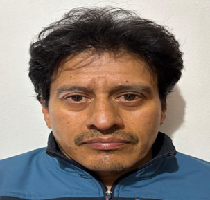
Name : Edgar Núñez Rojas
University : Universidad Autónoma Metropolitana Iztapalapa
Country : Mexico
Download Abstract